Skip to content
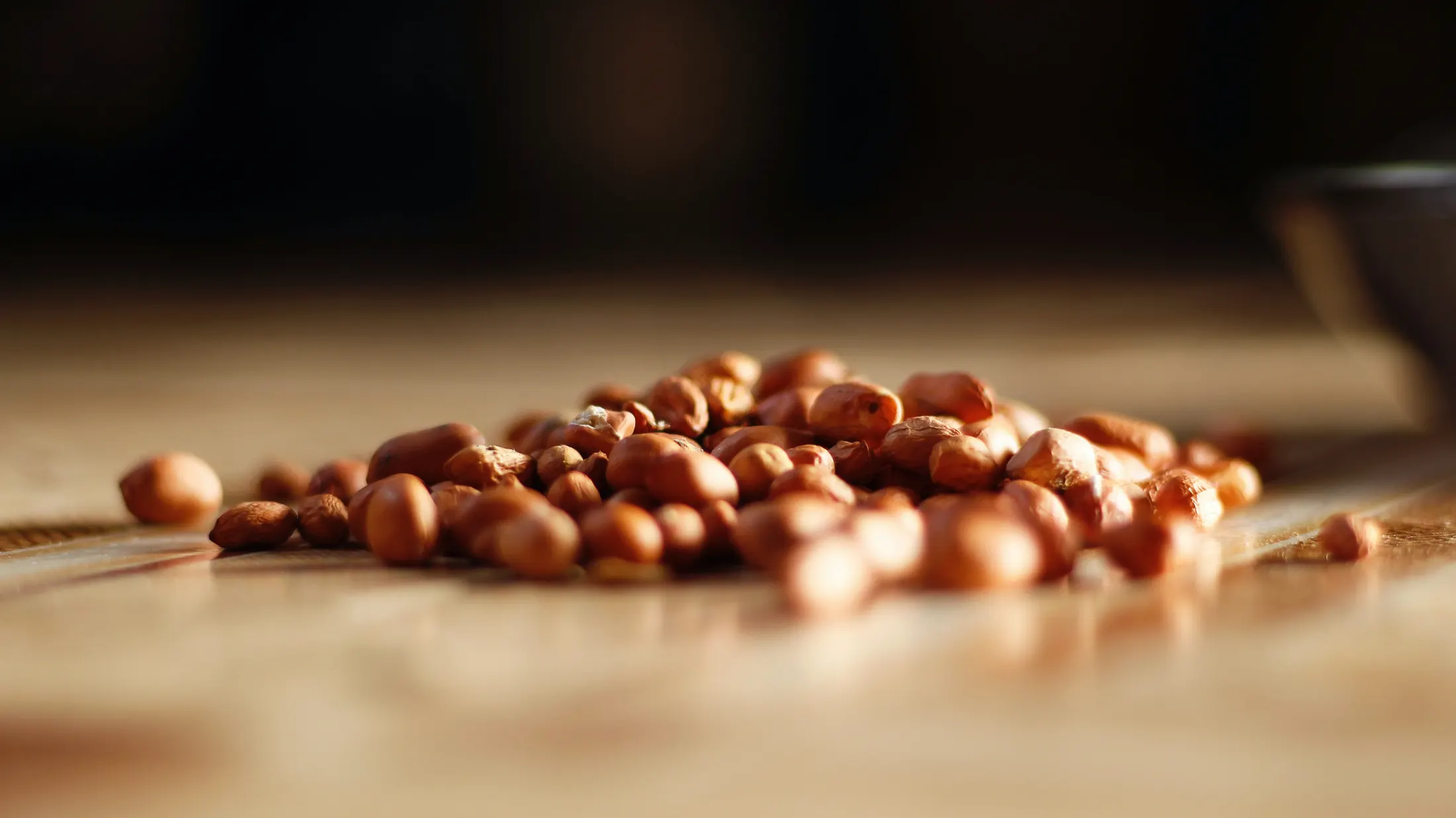
Red-skin peanuts spilled across a warm wooden surface under directional light

11 stages

Eleven stages between the farm gate and a sealed container — each one removing something that should not reach you.

Why it is built this way

Groundnut is our largest line, and the one where buyers scrutinise the process most closely. Aflatoxin, moisture and foreign matter are the three failure modes that stop a consignment at the border, so the line below is built around eliminating all three before anything is packed.

  1. 01Controlled temperature and humidity from intake

    Raw material storage

    We prioritise the quality and freshness of our raw materials. Our storage facility maintains controlled temperature and humidity, preserving the taste, aroma and nutritional value of incoming produce. The spacious storage area lets us hold large quantities while keeping strict quality control measures in force from the moment material arrives.
  2. 02Dirt, stones and foreign matter removed

    Pre-cleaning

    Before processing, raw material passes a thorough pre-cleaning stage that removes impurities — dirt, stones and foreign matter. Our manual labour separates unwanted particles efficiently, so only produce that clears this gate moves further down the line.

  3. 03Outer shell separated from the kernel

    De-shelling

    We de-shell peanuts to remove the outer shell or husk from the raw nut, preparing the kernel for further processing and packing. The step ensures only the inner kernel — the edible part — carries forward, with its natural flavour and nutritional profile intact.

  4. 04Heavy impurities gravity-separated out

    De-stoner

    A de-stoner machine removes stones, pebbles and other heavy impurities that survive pre-cleaning. Eliminating these protects both the downstream equipment and the cleanliness standard the finished lot has to meet.

  5. 05Light and immature seed removed by density

    Gravity seeds separator

    A gravity seeds separator uses controlled airflow and vibration to separate sound kernels from lighter and immature seed. Tuning those two variables against the incoming lot is what determines how cleanly the split lands, and only the heavier, mature fraction progresses.

  6. 06Colour, size and defect sorting

    Sorting

    Manual labours analyse the colour, size and quality of each kernel and automatically eject defective or substandard product. This is where lot uniformity is actually established — everything after it preserves a standard rather than setting one.

  7. 07Categorised into grades against agreed parameters

    Uniform grading

    Produce is sorted and categorised into grades against specific quality parameters. Consistent grading standards are what let us offer a range of options matched to a buyer's preference and market, and what let a repeat order arrive the same as the first one.

  8. 08Ferrous and non-ferrous fragments detected and rejected

    Metal separation

    Metal separation equipment detects and removes any metal particles present in the material. This is a food-safety control rather than a quality one — it is the step that keeps a consignment compliant with international food safety standards.

  9. 09Physical, chemical and microbiological testing

    Pre-shipment lab analysis

    Every lot undergoes pre-shipment laboratory analysis — physical, chemical and microbiological testing to verify quality, safety and compliance before it is cleared to ship. This is the point at which a consignment either passes or goes back.

  10. 10Microbial load reduced by approved methods

    Sterilisation

    Industry-approved sterilisation eliminates harmful microorganisms, bacteria and pathogens that may be present. It is what allows the lot to meet the food safety regulations of the destination market rather than only those of the origin.

  11. 11Sizes, materials and branding to your specification

    Customer-oriented packaging

    Packaging preserves freshness and quality in transit, and it is also where your requirements take over from ours. We offer a range of sizes and materials, and we print to your branding — so what arrives at your warehouse is ready for your market, not ours.

Where it happens

The plant at Red Hills, Chennai.

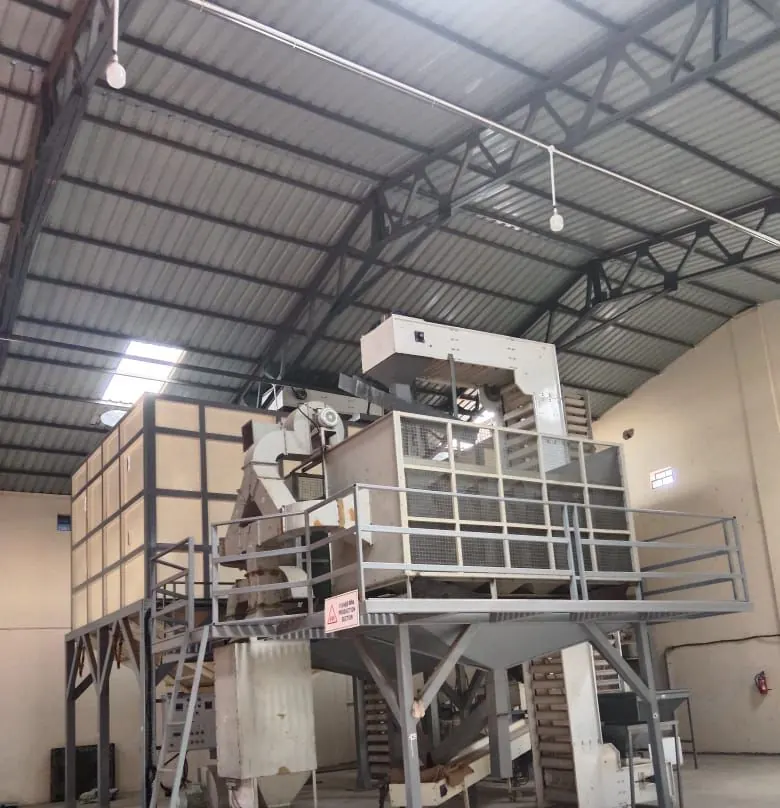
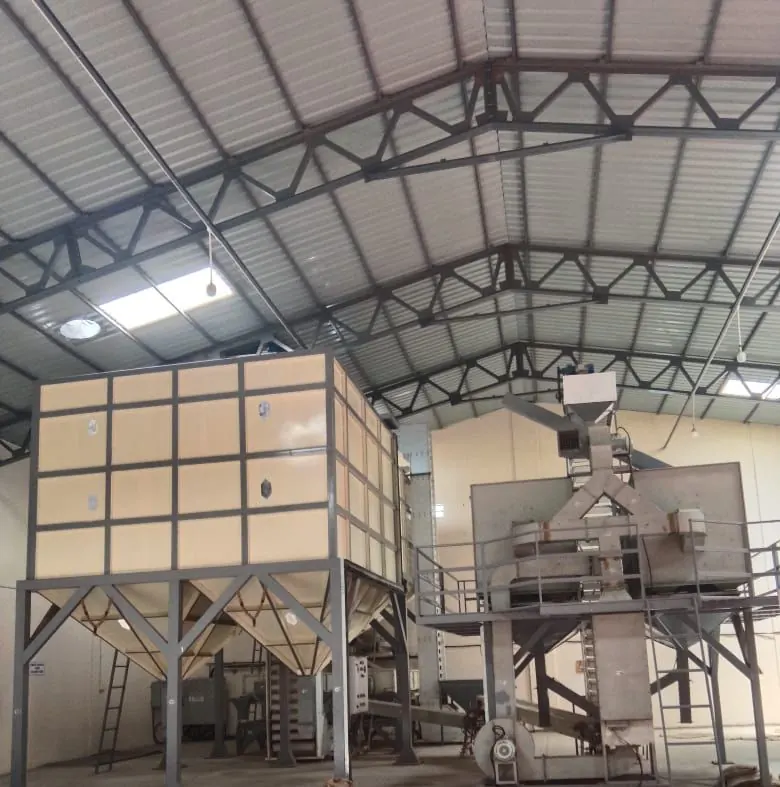
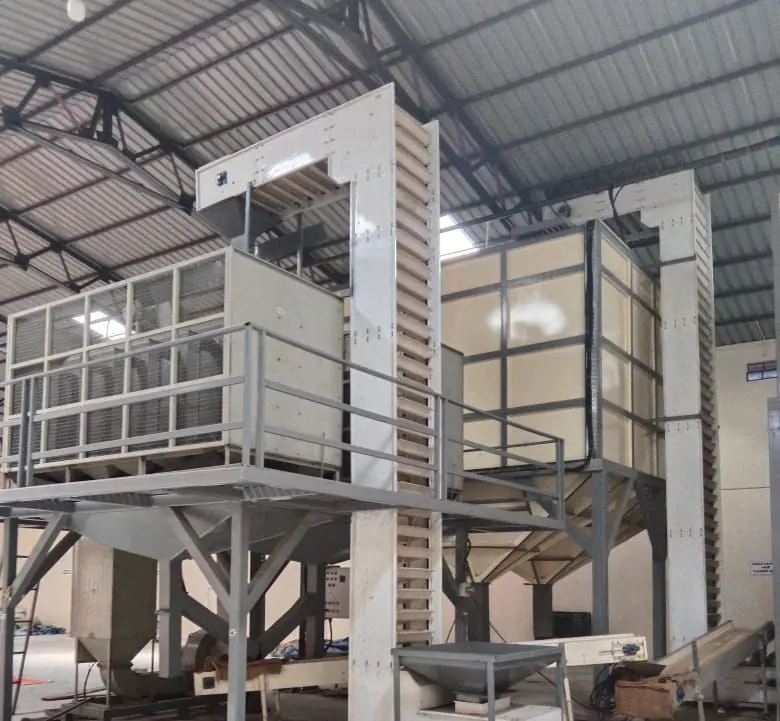
The stages above are not a diagram. This is the line they run on.

Wide view of the processing hall: a bank of steel holding silos on the left and the bagging line on the right
Two bucket elevators either side of a steel access platform, with discharge hoppers below
A grading deck with an aspirator and cyclone above it, reached by a steel walkway

Photographed at our Chennai (Red Hills) unit. Buyers and auditors are welcome to visit — get in touch and we will arrange it.

Certified & recognised by

ISO 22000 — Food Safety Management System
HACCP — Hazard Analysis & Critical Control Points
FSSAI — Food Safety and Standards Authority of India
GLOBALG.A.P. — Good Agricultural Practice
APEDA — Agricultural & Processed Food Products Export Development Authority
IOPEPC — Indian Oilseeds & Produce Export Promotion Council
FIEO — Federation of Indian Export Organisations
MSME — Ministry of Micro, Small & Medium Enterprises

Our products are certified by APEDA, Spices Board of India, FSSAI, USDA, EU, ISO and FIEO.

Start an enquiry

Send us the grade, volume and destination port. We will come back with availability, packing options and a quotation.

We reply within 24 hours · Mon–Fri, 10:00–19:00 IST (GMT +5:30)